
Disclaimer: All concepts and imagery in this article are AI-generated. I do not claim copyright ownership over any of the materials or brands featured. This is purely an inspirational concept and is not affiliated with Backbone, Xbox or Call of Duty (Activision).
The landscape of marketing and creative strategy is shifting under our feet and the traditional ways of campaign development, long briefing periods, iterative rounds of flat concepts, and the linear path from strategy to execution are being disrupted.
I believe we are entering an era where speed-to-insight and speed-to-market are becoming important – and this is where Generative AI comes into play.
For many people, Generative AI is still seen as just a tool for fast image creation (as a replacement for stock photos) or text generation. But to view it only through that lens is to miss the groundbreaking shift happening in everyday creative workflows. For me, Generative AI is not just changing how I make things; it is fundamentally changing how I think about campaigns, how I develop strategies, and how I visualise complex campaign rollouts before a single asset is even officially produced.
To visualise this in practice, I recently utilised the Google’s Gemini to develop a comprehensive collaboration concept between mobile gaming controller leader, Backbone and my favourite first/third person shooter game, Call of Duty by Activision.
The New Creative Workflow: From Linear to Exponential
Historically, the gap between a strategic idea and its visual representation was a gap that was filled with time and interpretation. A strategist might propose a “tactical, military-grade aesthetic,” but waiting for art direction to interpret that could take weeks.
Leveraging Google’s Gemini, I was able to collapse this timeline with a number of prompts. It allowed me to act as a real-time visualiser. I am moving from a linear process (Brief to Strategy to Concept to Design) into an exponential, integrated workflow where strategy and visualisation happen simultaneously.
This doesn’t remove the need for my creativity; it just supercharges it (as I always say, Generative AI should be a copilot, not a replacement for human creativity). It allows me to fail faster, explore wider, and hone in on the winning concept faster.
Concept Case Study: The Backbone x Call of Duty “Neural Ops Initiative”
To illustrate this, let’s explore the concept I developed for a 2026 collaboration between Backbone and Call of Duty. The goal was to target new-age gamers who value high-tech gear and performance, moving the perception of the Backbone controller being a casual accessory to a piece of essential “tactical” hardware.
1. Strategy-Led Visual Ideation
I didn’t just start with “make me a cool controller” as a prompt, I started with a strategic positioning, giving the campaign a name: The Neural Ops Initiative. The idea was to position the controller as a “Tactical Neural Interface.”
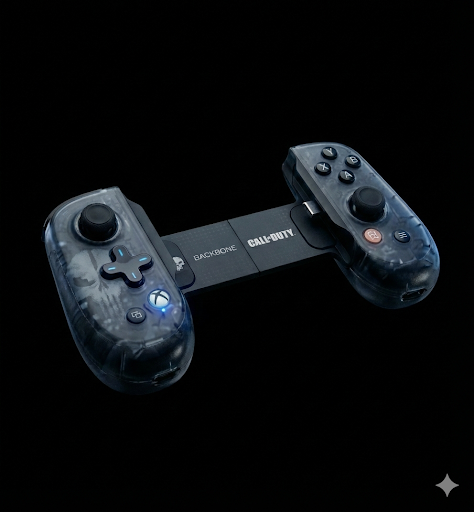
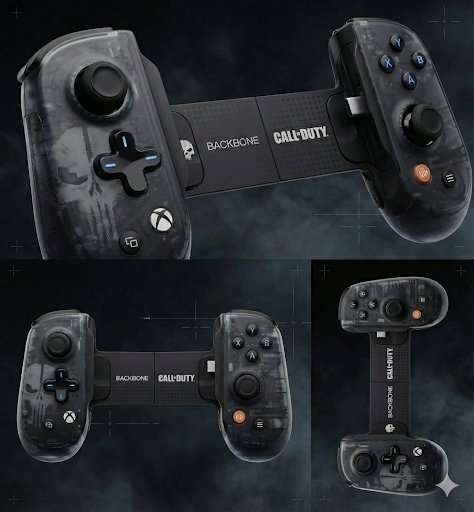
Using Nano Banana Pro, the image generation tool included in the Google AI Plus package, I immediately began testing and generating visuals against this positioning strategy. I explored various aesthetics before landing on a translucent, smoky-grey design that revealed internal circuitry of the controller (based off of a controller that Backbone developed in collaboration with Xbox ). This wasn’t just an aesthetic choice; it was a strategic one, aligning with the “tech-forward” target audience and the futuristic military tone of the game.
Nano Banana Pro allowed me to instantly visualise this specific hardware aesthetic across different angles, ensuring the physical product design itself was the hero of the campaign story.
2. Visualising the Entire Campaign Lifecycle
Where Generative AI truly shines is in mapping out a full campaign ecosystem. A campaign isn’t just one hero image; it is a narrative arc. I used Gemini to help structure the strategy and Nano Banana Pro to generate assets for every phase, ensuring visual consistency from day one.
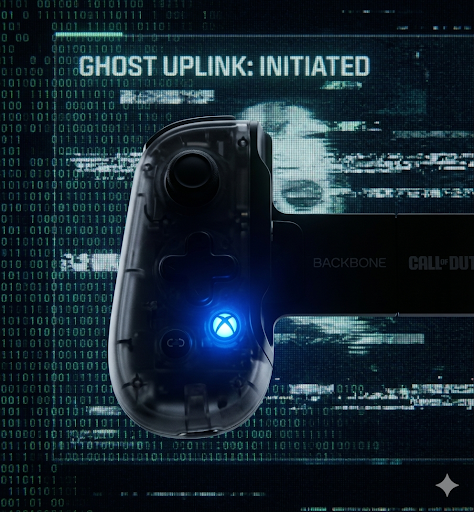
Phase 1: Infiltration (The Tease): I needed mystery. I generated dark, glitched visuals showing intercepted signals and obscured hardware. The tool helped me dial in the exact level of “reveal” to build hype without giving away the game.
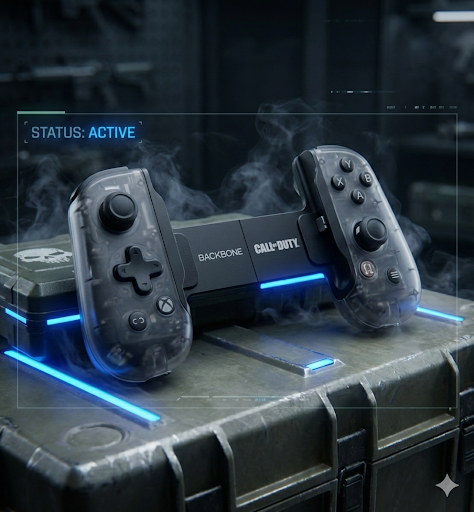
Phase 2: Activation (The Launch): This was about “shock and awe.” I took the finalised controller design and placed it in high-fidelity, cinematic environments, resting on military crates surrounded by smoke and tactical lighting.
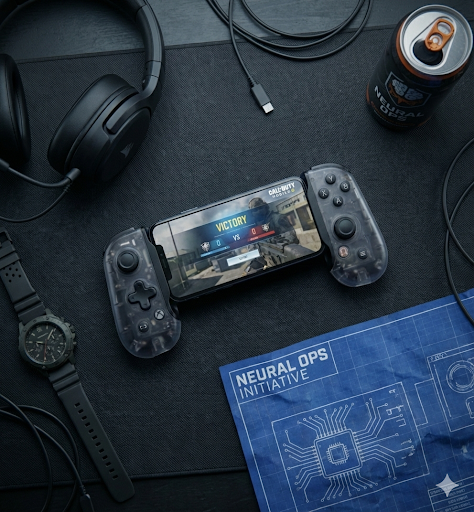
Phase 3: Mobilisation (The Sustain): To prove the hardware’s value, I needed to show it in a gamer’s natural habitat. I generated “flat lay” photography showing the controller alongside other tactical gear (watches, energy drinks, blueprints), cementing the “lifestyle” aspect of the strategy.
By generating these varied assets upfront, I could present a cohesive, fully realised vision to stakeholders instantly, rather than waiting for weeks of storyboard compositing.
Changing How I Execute
The “Neural Ops Initiative” concept demonstrates that Generative AI tools are redefining execution by turning abstract strategies into tangible assets almost immediately.
It cures the “blank page syndrome.”. Instead of staring at a white board, I can start with a dozen variations of a concept. My role shifts from pure creation to skilled curation, refinement, and direction.
Furthermore, it allows for better synchronisation between strategy and creative. When I can show, rather than just tell, what I mean by a “dark mode rollout,” alignment happens faster. The resulting campaign decks, complete with high-res visuals, phased rollouts, and clear KPIs, are far more compelling because the vision is already brought to life.
The Human Element Remains Paramount
Like the industrial revolution before it, the AI revolution is changing the nature of work, but it is not replacing the worker.
The successful ideation of the Backbone x Call of Duty concept relied entirely on human insight. Gemini didn’t dream up the “Neural Ops” strategy. Nano Banana Pro didn’t understand the nuance of the target audience’s desire for “translucent retro-tech.” They didn’t structure the three-phase deployment to maximise viral lift.
I supplied the vision, the strategy, and the emotional intelligence. The AI supplied the velocity and the visual horsepower.
The future of campaign planning belongs to those who can effectively partner with these tools, using them to bridge the gap between a strategic thought and its creative execution faster than ever before.