
OpenAI has officially begun testing ads within ChatGPT, marking a significant shift in the platform’s business model. After weeks of speculation and testing, the AI giant confirmed that users on the Free tier and the newly introduced, lower-cost ChatGPT Go plan will now see sponsored content during their interactions.
This move aims to subsidise the massive computing costs required to run large language models while keeping access open to a broader audience. However, for users accustomed to a clean, text-only interface, the experience of using ChatGPT is about to change.
The Rollout: What to Expect
According to reports, the rollout is currently in a testing phase focused on the US market.
Here are the key details on how these ads will function:
Who Will See Ads?
The advertisements are specifically targeted at:
- Free Tier Users: Those accessing the standard, no-cost version of ChatGPT.
- ChatGPT Go Users: Subscribers to the new “Go” tier, a budget-friendly subscription option designed as a middle ground between the Free and Plus tiers.
Users on premium plans (Plus, Pro, Business, and Enterprise) will remain in an ad-free environment.
Format and Placement
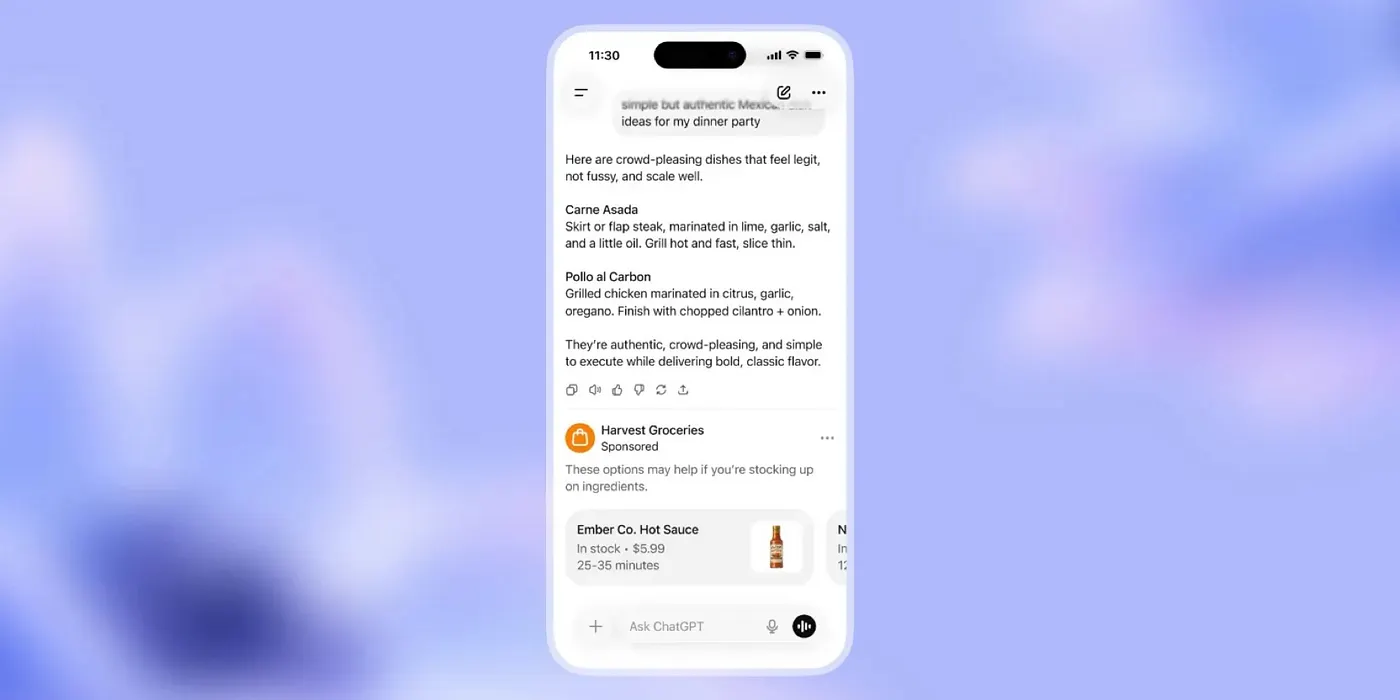
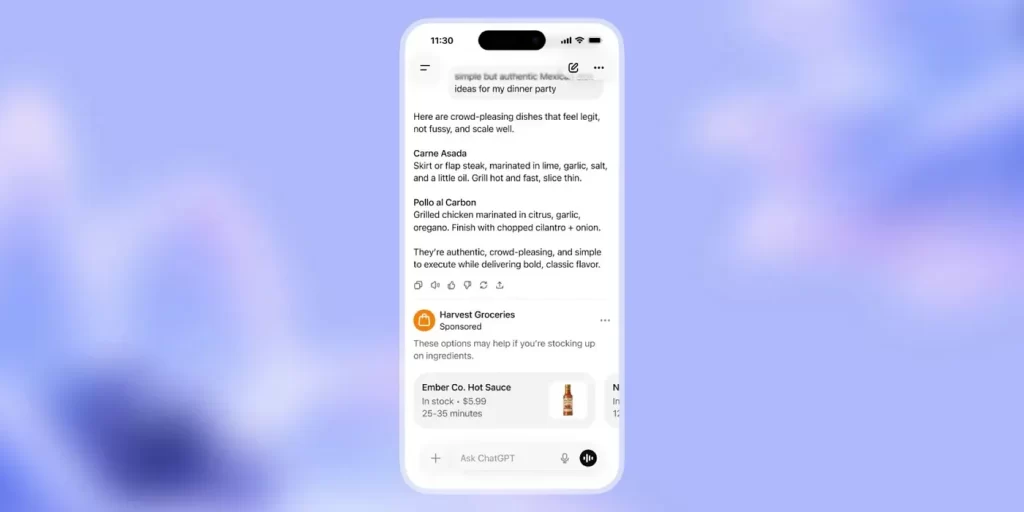
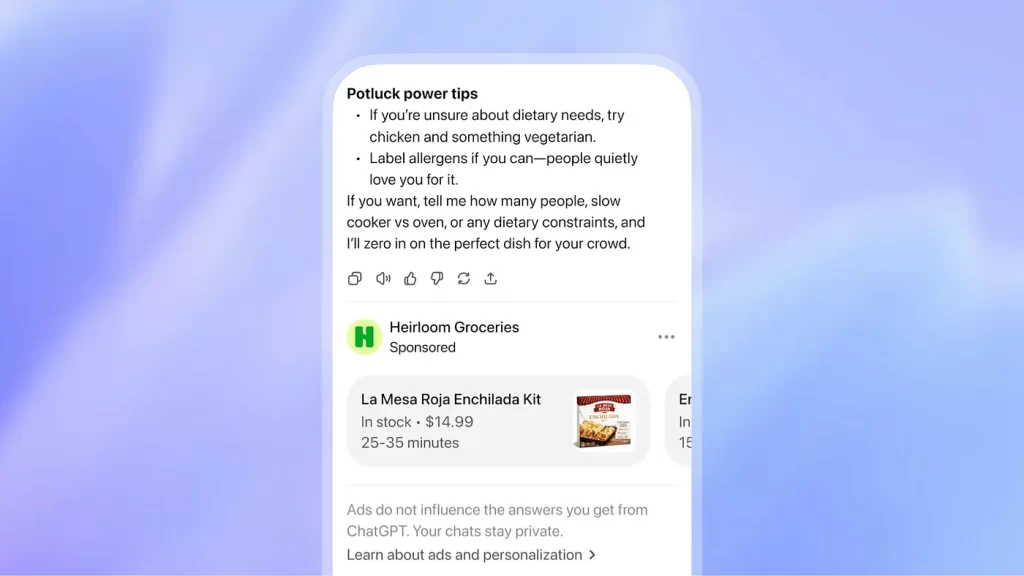
OpenAI has stated that ads will be clearly labeled as sponsored and visually distinct from the chatbot’s actual responses. The goal is to prevent confusion between AI-generated advice and paid marketing:
- Contextual Matching: Ads will be relevant to the topic you are currently discussing. For example, if you are asking for travel itineraries, you might see an ad for a travel agency or airline.
- Safety Rails: Safeguards have been put in place to prevent ads from appearing in sensitive conversations, such as those involving medical advice, mental health, or politics.
Privacy and User Control
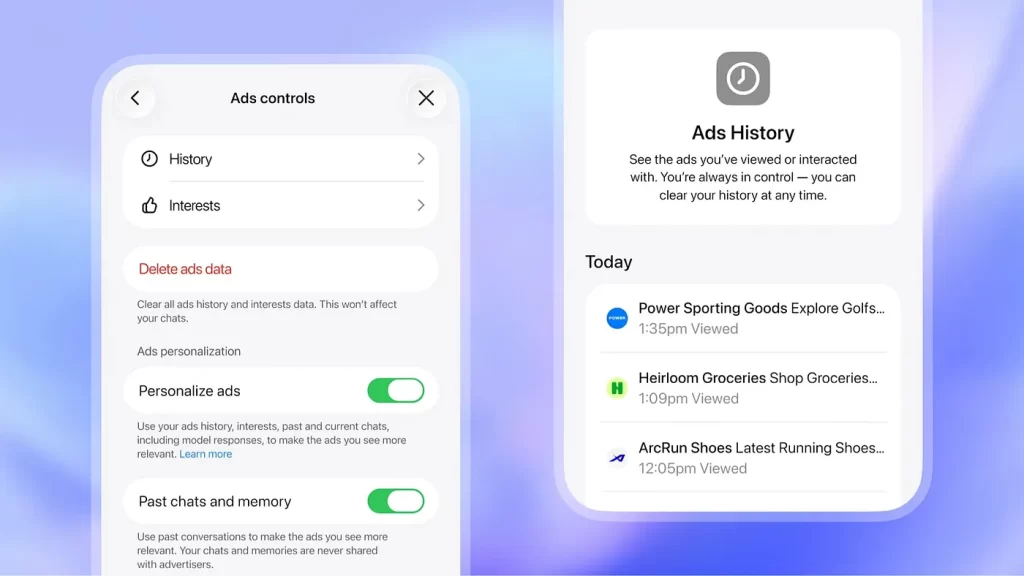
OpenAI has emphasized that while ads are contextual, personal chat data is not shared with advertisers. The matching happens within OpenAI’s systems, ensuring that brands do not get direct access to user conversation logs.
Opt-Out Options: Interestingly, OpenAI is offering a trade-off. Users can seemingly opt out of ads or toggle personalisation settings, but doing so may result in fewer free messages or tighter usage limits.
The Disruption of User Experience (UX)
The introduction of ads into a platform like ChatGPT represents a fundamental friction in User Experience design. Conversational AI interfaces have historically succeeded because they mimic a private, helpful consultation. Injecting marketing into this dynamic disrupts the UX in several critical ways:
Breaking the Conversational Flow
The primary value of an LLM (Large Language Model) is the “flow state”, which is the seamless back-and-forth between user and AI.
- Cognitive Load: When a user asks a complex coding question or seeks creative writing advice, their focus is entirely on the output. An ad, even if visually separated, demands a portion of the user’s cognitive attention, breaking the immersion and turning a tool into a billboard.
- The “Assistant” Illusion: Users often anthropomorphise AI as a neutral assistant. When that assistant suddenly pauses to display a sponsored message, the illusion of a dedicated helper shatters, reminding the user they are essentially using a search engine with extra steps.
Erosion of Trust and Neutrality
Even if OpenAI explicitly states that ads do not influence answers, the perception of bias is a UX nightmare.
If a user asks, “What is the best budget laptop?” and an ad for a specific brand appears above the answer, the user may subconsciously doubt the neutrality of the AI’s actual recommendation. This creates a “conflict of interest” in the user interface, where the user must constantly evaluate if the information provided is the best answer or the most profitable one.
Visual Clutter in a Minimalist Interface
One of ChatGPT’s strongest UX features has always been its minimalism – a simple text box and a stream of conversation.
- Screen Real Estate: On mobile devices, screen space is precious. Forcing ads into the chat stream pushes valuable answers off-screen, requiring more scrolling and interaction cost from the user.
- Banner Blindness vs. Intrusiveness: To make ads effective, they must be noticeable. To make UX good, ads should be invisible. This paradox means OpenAI will likely struggle to find a balance, potentially leading to “banner blindness” where users ignore the ads, or frustration where the ads become too intrusive.
Competitive Disadvantage
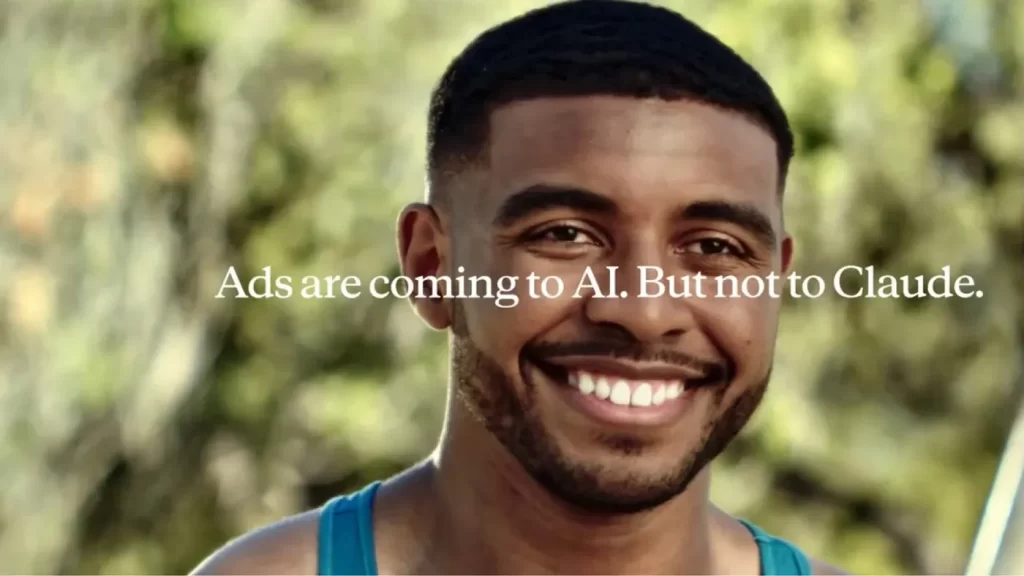
This shift highlights a divergence in the AI market. Competitors like Anthropic (Claude) have leaned heavily into a “no-ad” philosophy, even mocking the concept of ads in AI during their recent marketing campaigns.
For UX-conscious users, the presence of ads in ChatGPT may act as a push factor, driving them toward platforms that prioritise a cleaner, strictly utility-focused interface.